A research project at UCSF

A potentially easier way to deliver tumor-treating fields.

I’m raising money to support UCSF research into Autem, a promising new medical device designed to deliver tumor-treating fields for brain cancer—and potentially other cancers—with a dramatically simpler patient experience.

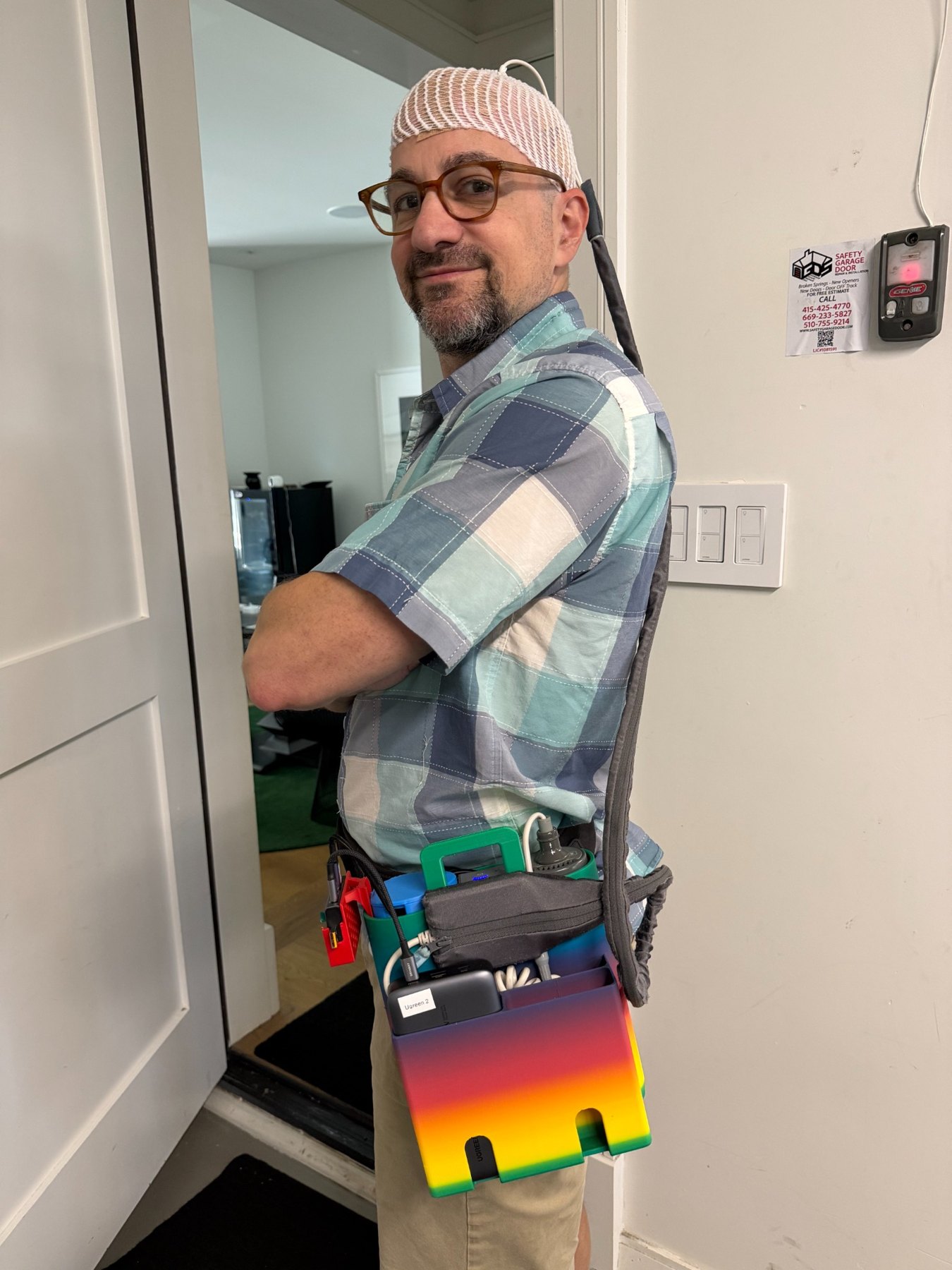
Dan wearing Optune, showing the head arrays and the device carried at his waist
Why this matters to me

This is the treatment I live with today.

I’m grateful that Optune exists. It uses tumor-treating fields and has proven efficacy in brain cancer. But it is also difficult to live with: I shave my head, wear electrodes on my scalp, and carry the device and batteries with me throughout the day.

That patient experience is a big reason Autem is so interesting. If the science holds up, it could offer a dramatically simpler way to deliver the same type of treatment.

Me wearing Optune, including the arrays on my head and the equipment I carry with me.

The project

Watch the story—or read the one-minute version.

Choose whichever works for you.
Watch 7:36 video
Read ~1 minute

I currently use Optune, an FDA-approved device that uses tumor-treating fields—electrical fields designed to interfere with cancer cell division. It can slow tumor growth, but the treatment is extremely burdensome.

Autem is developing a radically simpler way to deliver tumor-treating fields. Its small, spoon-shaped device is placed in the mouth for short treatment sessions. Early studies in Brazil have been encouraging, but rigorous research is still needed.

My neurosurgeon, Dr. Shawn Hervey-Jumper at UCSF, has committed his lab to studying how the technology works and then moving into a clinical trial, with the long-term goal of generating the evidence needed for FDA approval.

What the funding supports

From basic science to a clinical trial.

The UCSF work is designed as a two-part program: first understand the biology deeply, then test the device in patients.

1

Understand how it works

Dr. Hervey-Jumper’s lab will study the mechanism of action—how the tumor-treating fields generated by Autem affect cancer cells.

2

Move into patients

The next phase is a clinical trial, with the long-term goal of generating the evidence needed to pursue FDA approval.

$1.5 million goal. Nearly $1 million raised.

We have roughly $500,000 left to raise. All contributions go to the Dan Scholnick Brain Cancer Research Fund at UCSF, established specifically to support the Autem work in Dr. Hervey-Jumper’s lab.

Donate to UCSF

Contributions are charitable donations to UCSF and are tax-deductible. If you would like to contribute through a donor-advised fund, please contact me for instructions.